Showing posts with label baby injuries. Show all posts

Wednesday, February 15, 2012

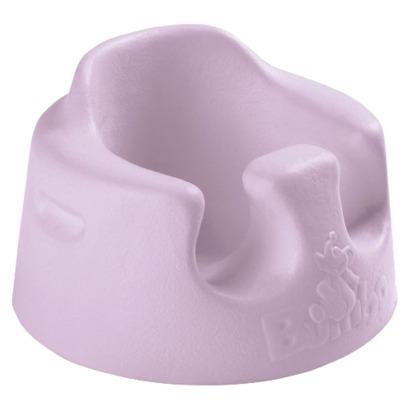
The Trouble With Bumbo: Babies Getting Hurt Too Often

If you’ve been around infant children anytime in the last few years, I am sure that you have at least seen the Bumbo “Baby Sitter” Seat, even if you didn’t know what it was called. The Bumbo seat was designed by Bumbo International to help infants sit upright once they can support their head. Approximately 3.85 million have been sold since hitting the market in August 2003.

The Bumbo seat was voluntarily recalled in October 2007 due to children falling out of it and incurring serious head injuries. At that time, a warning label was added to the seat which warned against using the seat on elevated surfaces such as tabletops and countertops and sofas. The Bumbo seat was designed and marketed for floor level use only, however, parents have consistently used the product on elevated surfaces such as tables, countertops, and chairs. Many parents even use it as a countertop highchair due to its small convenient size.

But the warning label has not been enough to prevent injury. After the warning label was added and parents used the seat only on the floor, reports of injuries continued to come in.

After the 2007 recall, CPSC has reported 45 accidents in which infants have fallen out of the seat while being used on elevated surfaces. 17 of those incidents resulted in skull fractures of infants ranging from 3 to 10 months old. Prior to the recall, the manufacturer is now aware of 46 falls from seats used on elevated surfaces. 14 of these resulted in skull fractures, two concussions, and a broken limb.

The main problem with this seat seems to be the fact that it was not designed to be completely restrictive and it is possible for a child to wiggle out of the Bumbo seat and fall. So even using it on the floor can still result in serious accidents or injury to babies. What happens is that a baby with arch their back which enables them to get their legs free and roll out of the seat. The other scenario is when the baby leans over to the side to reach for an object and the seat flips over with them. Many babies are landing on their heads when either of these scenarios occurs.

In January of 2012, there were 5 additional reports of injuries to babies using the Bumbo seat on the CPSC website for reporting injuries (www.saferproducts.gov).

If you do want to continue using your Bumbo seat, please keep the following in mind:
  • NEVER use on an elevated surface.
  • NEVER use as a car seat or bath seat.
  • NEVER leave your child unattended.
  • DO NOT USE on hard flooring such as hard wood, concrete or tile.
  • CLEAR the surrounding area of toys so that the baby won’t reach over the side and the toys won’t harm the baby if they fall on the toy.
  • Visit the manufacture’s website at www.bumbosafety.com for helpful info. 
  • Contact the U.S. Consumer Product Safety Commission (CPSC) to report incident or injuries from this product at www.saferproducts.gov.
The Studstill Firm, LLP is dedicated to helping prevent accidents and injuries to children. If you or a loved one has been injured by a product, please let us know about it so we can help spread the word and prevent injuries to others.

Friday, December 2, 2011

Good Juice, Bad Juice

Did you hear the breaking news yesterday about dangerous levels of arsenic being found in our kids’ apple and grape juices? Well, it’s serious business.

Consumer advocates are saying the FDA is allowing too much inorganic arsenic into apple and grape juice and that the government is failing to enforce protective standards. The FDA allows 23 parts per billion as a benchmark to determine whether apple juice is contaminated. Consumers Union, publisher of Consumer Reports, is calling for this level to be reduced to as low as 3 parts per billion. The EPA’s level for drinking water, set at 10 parts per billion, is much safer than the juice our little ones are currently drinking!

Consumer Reports, a product-testing organization, analyzed 88 samples of juice and found that 9 of those samples had arsenic levels exceeding federal limits set for drinking water. Of those brands sampled were:
  • Apple & Eve
  • Great Value
  • Mott’s
  • Walgreens
  • Welch’s
At least one of each of these brands had a sample that exceeded the 10 parts per billion threshold. Consumer Reports also reported that 25% of all juice samples had lead levels at or above the federal limit for bottled water. Grape juice samples were actually higher than apple juice.

What are the dangers of arsenic? Well, organic arsenic is not harmful to the body and will quickly pass through. It’s the inorganic arsenic that’s the problem. Inorganic arsenic is known to cause bladder, lung, and skin cancer as well as increase the risk of heart disease and type 2 diabetes. Some reports have even suggested that arsenic exposure can affect brain development in children!

So what should you do if you have a juice-drinking toddler? All of the experts, including the government and consumer advocates, agree that the concern is over drinking large amounts of juice over a long period of time. Drinking small amounts of apple juice is not harmful. However, options to consider are:
  • Limit juice intake of children under 6 to 6 ounces a day.
  • Limit juice intake of children over 6 to no more than 8-12 ounces a day
  • Infants under 6 months should not consume juice at all
  • Dilute your child’s juice with water first
  • Diversify brands of juice purchased in case one brand tends to have higher arsenic levels

Monday, May 30, 2011

Teething Baby? Think Twice About Oral Medications

The FDA recently issued a warning concerning the use of Benzocaine, a local anesthetic used to relieve pain in the mouth and gums. The product is commonly used for pain associated with teething, canker sores, and irritation of the mouth and gums.


The FDA became concerned about products containing benzocaine because they may cause a rare but serious and possibly fatal condition where oxygen in the blood stream is greatly reduced. This condition is called methemoglobinemia. In the most serious cases, this condition can result in death.


Benzocaine products do not currently carry any warnings regarding methemoglobinemia, therefore, the FDA is concerned that consumers might not be aware of the danger or know what to look for when using these products. Signs and symptoms of methemoglobinemia include pale, gray or blue colored skin, lips and nail beds, shortness of breath, fatigue, confusion, headache, lightheadedness, and rapid heart rate.


The FDA is particularly concerned about the use of benzocaine products in children under two years of age. There have been 21 reported cases of methemoglobinemia after using benzocaine gels and liquids. Eleven of the 21 cases occurred in children under age two.


If while using benzocaine products any of the symptoms of methemoglobinemia appear, persons should stop using the product immediately and call 911. If left untreated, serious cases may lead to permanent injury to the brain and body tissues, and even death. Parents are cautioned not to use this product on children less than two years of age unless it is given under the advice and supervision of a healthcare professional. These products should always be kept out of reach of children.


The American Academy of Pediatrics recommends that for teething problems in children, safer alternatives such as chilled teething rings or gentle massage to the gums using a cloth or your finger are preferred over benzocaine products. For a list of products containing benzocaine, visit the FDA’s website.