Showing posts with label product recalls. Show all posts

Wednesday, February 15, 2012

The Trouble With Bumbo: Babies Getting Hurt Too Often

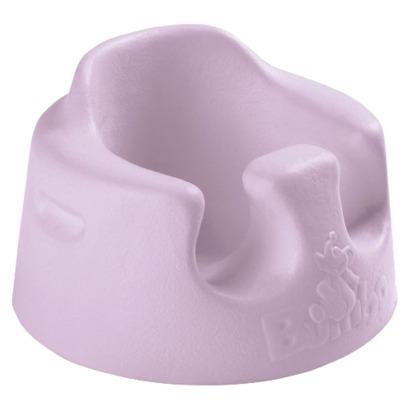
If you’ve been around infant children anytime in the last few years, I am sure that you have at least seen the Bumbo “Baby Sitter” Seat, even if you didn’t know what it was called. The Bumbo seat was designed by Bumbo International to help infants sit upright once they can support their head. Approximately 3.85 million have been sold since hitting the market in August 2003.

The Bumbo seat was voluntarily recalled in October 2007 due to children falling out of it and incurring serious head injuries. At that time, a warning label was added to the seat which warned against using the seat on elevated surfaces such as tabletops and countertops and sofas. The Bumbo seat was designed and marketed for floor level use only, however, parents have consistently used the product on elevated surfaces such as tables, countertops, and chairs. Many parents even use it as a countertop highchair due to its small convenient size.

But the warning label has not been enough to prevent injury. After the warning label was added and parents used the seat only on the floor, reports of injuries continued to come in.

After the 2007 recall, CPSC has reported 45 accidents in which infants have fallen out of the seat while being used on elevated surfaces. 17 of those incidents resulted in skull fractures of infants ranging from 3 to 10 months old. Prior to the recall, the manufacturer is now aware of 46 falls from seats used on elevated surfaces. 14 of these resulted in skull fractures, two concussions, and a broken limb.

The main problem with this seat seems to be the fact that it was not designed to be completely restrictive and it is possible for a child to wiggle out of the Bumbo seat and fall. So even using it on the floor can still result in serious accidents or injury to babies. What happens is that a baby with arch their back which enables them to get their legs free and roll out of the seat. The other scenario is when the baby leans over to the side to reach for an object and the seat flips over with them. Many babies are landing on their heads when either of these scenarios occurs.

In January of 2012, there were 5 additional reports of injuries to babies using the Bumbo seat on the CPSC website for reporting injuries (www.saferproducts.gov).

If you do want to continue using your Bumbo seat, please keep the following in mind:
  • NEVER use on an elevated surface.
  • NEVER use as a car seat or bath seat.
  • NEVER leave your child unattended.
  • DO NOT USE on hard flooring such as hard wood, concrete or tile.
  • CLEAR the surrounding area of toys so that the baby won’t reach over the side and the toys won’t harm the baby if they fall on the toy.
  • Visit the manufacture’s website at www.bumbosafety.com for helpful info. 
  • Contact the U.S. Consumer Product Safety Commission (CPSC) to report incident or injuries from this product at www.saferproducts.gov.
The Studstill Firm, LLP is dedicated to helping prevent accidents and injuries to children. If you or a loved one has been injured by a product, please let us know about it so we can help spread the word and prevent injuries to others.

Monday, November 14, 2011

Are Bad Boy Buggies Living Up To Their "Bad" Name?

The manufacturer of Bad Boy Buggies, an off-road utility vehicle, has recently recalled 3,200 Bad Boy Buggies due to a defective steering arm assembly. Essentially, the recall was issued because the vehicles contain a defective steering arm assembly which could break during normal operation and leave the vehicle uncontrollable and result in crashes with injuries.

According to the manufacturer, there have been 15 reported incidents of the steering arm breaking in these vehicles causing the driver to lose control. The following Bad Boy Buggy Models (pictured below) are involved in the recall: (1) Bad Boy LT; (2) Classic; (3) XT; (4) XTO, and (5) XT Safari. 
These models were manufactured at BB Buggies in Augusta, Georgia and Bad Boy Enterprises, LLC in Natchez, Mississippi and were sold nationwide.

This recall follows on the heels of an earlier recall of 9,300 Bad Boy Classic Buggies which contained defective accelerator petals that caused sudden and unintended acceleration. That recall involved Bad Boy Classic Buggies which were manufactured by Bad Boy Enterprises, LLC between 2003 and May 2010.

Owners of these vehicles should stop using them immediately and contact Bad Boy Buggies at (855) -738 3711 or visit its website at http://www.badboybuggies.com/.

Thursday, August 18, 2011

Hip Implant Not Giving You Problems?

If you have a hip implant or if you know someone who has had a hip replacement, the following information may be helpful to you regardless of whether the hip implant is causing you problems or injuries today.

Hip Implant Recall
One year ago, Johnson & Johnson recalled a hip implant it manufactures under the DePuy Orthopaedics label. It turns out the DePuy ASR hip implant system is faulty. It is a metal-on-metal (“MOM”) product that began being implanted in 2003. At first, DePuy marketed the hip as new technology that was the “Rolls Royce” of hip implants – it was designed to be implanted in a younger, more active population for long-term use.
Timeline of the Recall 
After only a couple years of use, problems with the device began to surface. The first reports of problems appeared in 2005. In 2007, DePuy began pulling some of its systems off the market in Australia due to widely-publicized problems, but it stayed on the market in the United States. In 2009, DePuy began a “silent recall” which involved decreasing sales and pulling some of its inventory from the market. On July 17, 2010, DePuy finally issued an official recall of the ASR Acetabular implants, more than 5 years after the problems began.
Problems with Design 
As it turns out, the device was very poorly designed. The shallow nature of the cup is different than other MOM devices in two primary ways that have caused problems:
  1. It causes excessive heat and friction between the metal cup and the metal ball; and
  2. The size, design and location of the resurfacing cup are three important factors that relate to the release of metal ions in the body. The design at issue here increases friction at multiple contact points between the femoral head and the acetabular cup. 
Injuries to Patients
The problems with the implant have required revision surgeries where the patient has to have the DePuy system removed and a new system put in. Some of the common symptoms and difficulties associated with the DePuy recalled product include:
  • Difficulty standing or walking
  • Crunching or popping noises
  • Hip fractures or dislocation
  • Inflammation and swelling
  • Tissue and muscle infection and necrosis (which is tissue death)
  • Cobalt and Chromium Toxicity also known as Metalosis
  • Severe Pain
  • Dislocation
  • Loss of muscle mass
Metalosis
Metalosis is a common problem caused by metallic particles being released into surrounding tissue and into the bloodstream. The excessive heat and friction between the metal cup and the metal ball creates these metallic particles. The friction results in ions of chromium and cobalt being released into the body. As a result, patients are experiencing Aseptic Lymphocytic Vasculitis Associated Lesions (“ALVAL”) from heavy metal toxicity. Symptoms of metalosis include:
  • Swelling in and around the implant site
  • Spontaneous dislocation of the hip
  • Nerve palsy
  • Noticeable mass or rash
  • Groin or thigh pain
  • Fatigue
  • Intense pain in the hip
The long-term injuries from metalosis include:
  • Damage to the tissue and muscle surrounding the prosthesis, including necrosis
  • Bone deterioration (may be progressive)
  • Infection
  • Possibly cancerous
No Problems Yet?
Many people who have had problems with their hips have had a hip replacement or revision surgery. However, many people who have the faulty product may not be currently experiencing problems with the device and they may not be aware that they need to act now to preserve their potential claims for a future revision surgery. Here’s why:
In these types of cases involving massive produce recalls affecting thousands of people, the manufacturer will enter into an agreement that stops the clock from running out on people who have been affected. What this does is allow people who don’t realize they are affected to be able to proceed at a later time when they realize they need to do something. Unfortunately DePuy and Johnson & Johnson have not done this and it looks like they are not going to. That means that people in Georgia (and other states that have only a 2 year statute of limitations) who have these faulty hip implants but have not yet experienced symptoms of pain or needed a hip revision surgery or who do not yet have high levels of cobalt and chromium toxicity will still be required to act no later than August of 2012 or lose their ability to pursue a claim against the manufacturer.
What You Need To Do
Because the deadline will most likely be August of 2012, anyone who has a hip implant (even if you have not had any adverse effects) needs to do the following:
  1. Contact their surgeon to determine what type of implant they have
  2. Get an appointment to have diagnostic testing performed to determine if your implant is injuring you
  3. Do NOT sign a release from the surgeon or DePuy or Johnson & Johnson
  4. Consider keeping a journal of the problems and treatment related to the hip implant
  5. Contact an attorney that handles the DePuy cases for a free consultation as soon as possible
Please feel free to contact one of our hip implant recall attorneys for more information. Danny Studstill is located in South Georgia near Tifton and Valdosta. Haynes Studstill is located in Middle Georgia in Macon. We would be happy to speak with you and help you determine if you need to take action.
Tuesday, August 31, 2010

Recalled Hip Implants

After complaints from several hundred patients and a warning letter from the FDA, Johnson & Johnson is recalling its popular metal-on-metal hip replacement mechanism known as the ASR XL Acetabular System. This product is made by DePuy Orthopaedics which is a division of Johnson & Johnson.


This product is being recalled due to its high failure rate which results in additional hip replacement surgeries to many patients. One such type of failure is that the implant does not properly adhere to the bone and becomes unattached. Another such failure is that over time metal particles slough off and the debris causes inflammation, tissue damage and extreme pain to an individual. There is also some research that indicates that the cobalt and chromium materials used in these implants can be toxic and may lead to certain cancers, including leukemia.


Of course, this recall comes in the wake of several other recalls by Johnson & Johnson – most notably Tylenol Children's liquid. The president of DePuy Orthopaedics said, “We are committed to assisting patients and health care providers by providing information through multiple channels and paying for the costs of doctor visits, tests and procedures associated with the recall.”


If you or anyone you know has been injured by a product such as the DePuy hip implant or any other defective product contact our Valdosta Attorneys for a free consultation about your potential case.

Tuesday, July 27, 2010

Nap Nanny Product Recall

Yesterday, the Consumer Products Safety Commission announced that Baby Matters, LLC is voluntarily recalling approximately 30,000 baby recliners following the death of a 4-month-old girl from Michigan. Baby Matters, LLC is aware of 22 total incidents involving this product. The Michigan girl died when she fell over the edge of her recliner and was pinned between the recliner and her crib bumper causing her to suffocate.

The product already has warning labels, stickers and other types of warnings indicating that the Nap Nanny should never be placed inside a crib, play yard or other confined area, or on a table, countertop or other elevated surface.

Proper Use: Always use the Nap Nanny on the floor away from any other products


INCORRECT USE: Photo of re-enactment of doll falling over side of Nap Nanny® placed in crib.


Baby Matters is offering an $80 discount coupon towards the purchase of a new Nap Nanny, with free shipping for owners of a first generation Nap Nanny (purchased before August 15, 2009 and identified by the absence of Velcro straps inside the cover).

Consumers with a second generation Nap Nanny model are being encouraged to stop using the product until they are able to visit the firm's website to obtain new product instructions and warnings as well as view an instructional video to help consumers ensure the harness is properly fastened.

If you or anyone you know has been injured by a product such as this or any other defective product, contact us for a free consultation about your potential case.

Thursday, June 10, 2010

Product Recall - Shrek Promotional Glasses

Just weeks after Wal-Mart and other stores recalled jewelry sold at their stores due to the presence of cadmium, McDonalds is also recalling its promotional Shrek themed glasses for the same reason. These glasses are 16 ounces and come in four different designs (Shrek, Fiona, Puss n’ Boots, and Donkey).


Please see the May 20, 2010 post for details on the dangers of ingesting cadmium. You can also visit www.cdc.gov or www.epa.gov.

The CSPC spokesperson, Scott Wolfson, has stated that the amount of cadmium found in these glasses is “slightly above the protective level currently being developed by the agency.” He also said the glasses contain “far less cadmium than the children's metal jewelry that CPSC has previously recalled."

So far, no injuries have been reported as a result of the toxic chemical found in the paint on the glasses. However, out of an abundance of precaution, McDonalds has recommended that their customers stop using the glasses and is offering $3 refunds on those glasses. (They were originally sold for $2 each.)

If you or anyone you know has been injured by a product such as this or any other defective product, contact us for a free consultation about your potential case.

Thursday, May 20, 2010

Product recall: Miley Cyrus jewelry

Just yesterday, Wal-Mart announced that it was recalling its entire line of the popular Miley Cyrus brand of jewelry following reports that the jewelry contains a high level of cadmium – a toxic metal.

Long-term exposure to this metal is dangerous because it can cause bone softening and kidney failure and because it can hinder brain development. There is no danger in wearing the jewelry; however, it can be very dangerous if the metal is ingested. For example, many children place their jewelry/pendants in their mouth and suck and chew on them. This particular jewelry line, when exposed to a chemical similar to stomach acid, very easily released the toxic metal.

Exposure to this chemical is especially hazardous to girls ages 6-11. This may be because girls in this age range tend to have iron deficiencies and their bodies substitute cadmium instead.

Wal-Mart has also recalled some of its Disney pendants.

Claire’s and Dollar N More stores have also recalled some of the charm bracelets sold at their stores.

If you or anyone you know has been injured by a product such as this or any other defective product, contact us for a free consultation about your potential case.

Wednesday, May 19, 2010

Product recall: "Auto Fire" toy target set

The below-pictured toy dart gun set has been recalled by Family Dollar Store in conjunction with the Consumer Product Safety Commission (CPSC) following the deaths of two children. The suction cups, which are smaller than the size of a penny, present an asphyxiation hazard. These defective toys can cause children to suffocate and suffer brain injuries and even death. The two children’s deaths were caused when the children placed the soft, pliable plastic toy dart in their mouths and breathed them into their airways.

The dart guns were manufactured in China and sold exclusively by Family Dollar Stores. Family Dollar Stores began selling the toy in September 2005 and stopped selling it in January 2009. The recall was just announced on May 17, 2010.